Beyond the overwater cliché — a curator's map to the resorts where the silence costs as much as the suite.
There is a moment, somewhere between the seaplane's second turn and the first sight of your villa's thatched roof from the air, when the Maldives stops being a destination and becomes a feeling. We have been arranging private journeys to this archipelago for the better part of two decades, and the truth we keep returning to is this: most travellers never see the Maldives that exists beyond the brochure.
This guide is for the ones who want to.
Why the Maldives still matters in 2026
The Indian Ocean has not run out of beautiful islands. What it has run out of is silence. The atolls north of Malé — Noonu, Raa, Baa — are where the most considered resorts have quietly opened in the last five years, and where the experience still resembles what the Maldives was twenty years ago: a single house on a single island, no day-trippers, and a staff-to-guest ratio that approaches absurdity.
The twelve islands we keep returning to
Soneva Jani, on Medhufaru in the Noonu Atoll, remains our most-requested address. The over-water reserves come with retractable roofs above the bed — a piece of theatre that sounds like a gimmick until the first night, when the sky tilts open and you understand. Joali Being, on Bodufushi, is the more meditative cousin: a wellbeing-led property where the spa is the architecture, not an annex of it.
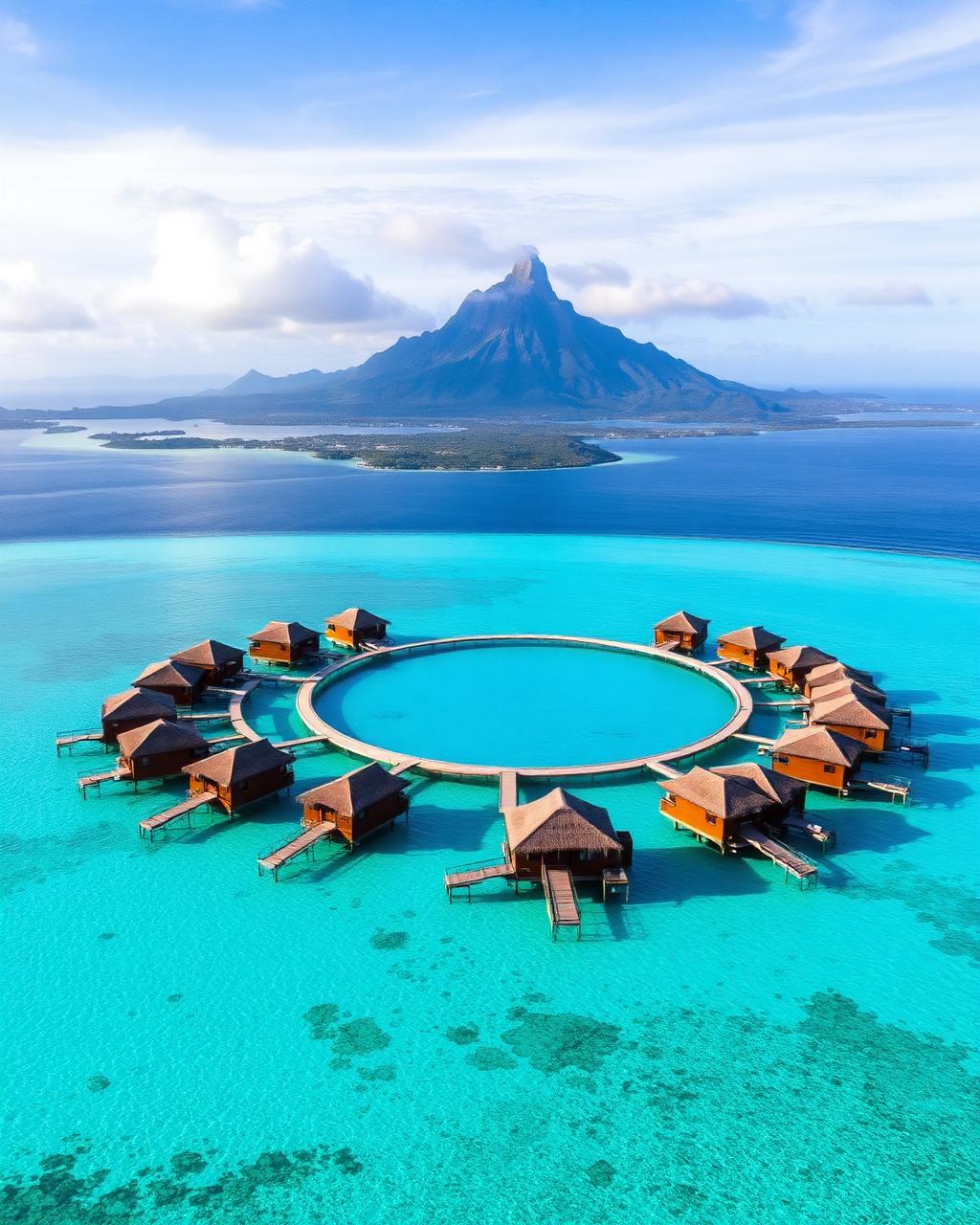
Further north, Velaa Private Island remains the choice for travellers who want the Maldives without ever sharing a horizon. The villas are arranged around a hidden lagoon; the wine cellar is reached by descending a glass staircase into the reef. It is, by some margin, the most theatrical hotel in the country.
For the design-led, Patina Maldives on Fari Islands is the most architecturally ambitious property to open this decade. For the families, it is Cheval Blanc Randheli — still, after eleven years, the gold standard of effortless luxury at scale.
When to go (and when absolutely not to)
Avoid May, June and July. The southwest monsoon brings short, dramatic storms and a sea that loses its glass. The window we recommend, almost without exception, is mid-November through early April. Within that window, late February and early March deliver the calmest water and the lowest humidity — and, crucially, the best chance of seeing the manta ray aggregations in Hanifaru Bay.
How to get there without losing a day
There are two ways to reach the outer atolls: seaplane (loud, scenic, weather-dependent) or domestic flight followed by speedboat (faster, drier, far less romantic). For Noonu and Raa, we book the seaplane and route the arrival to land in late afternoon — the shadows on the reef from above are reason enough.
If you are flying long-haul, we route most of our travellers through Doha on Qatar Airways or through Dubai on Emirates. The new Qsuite cabin remains the most considered business product in the sky, and the connection at Hamad is graceful in a way that Heathrow has forgotten how to be.
What to ask the atelier
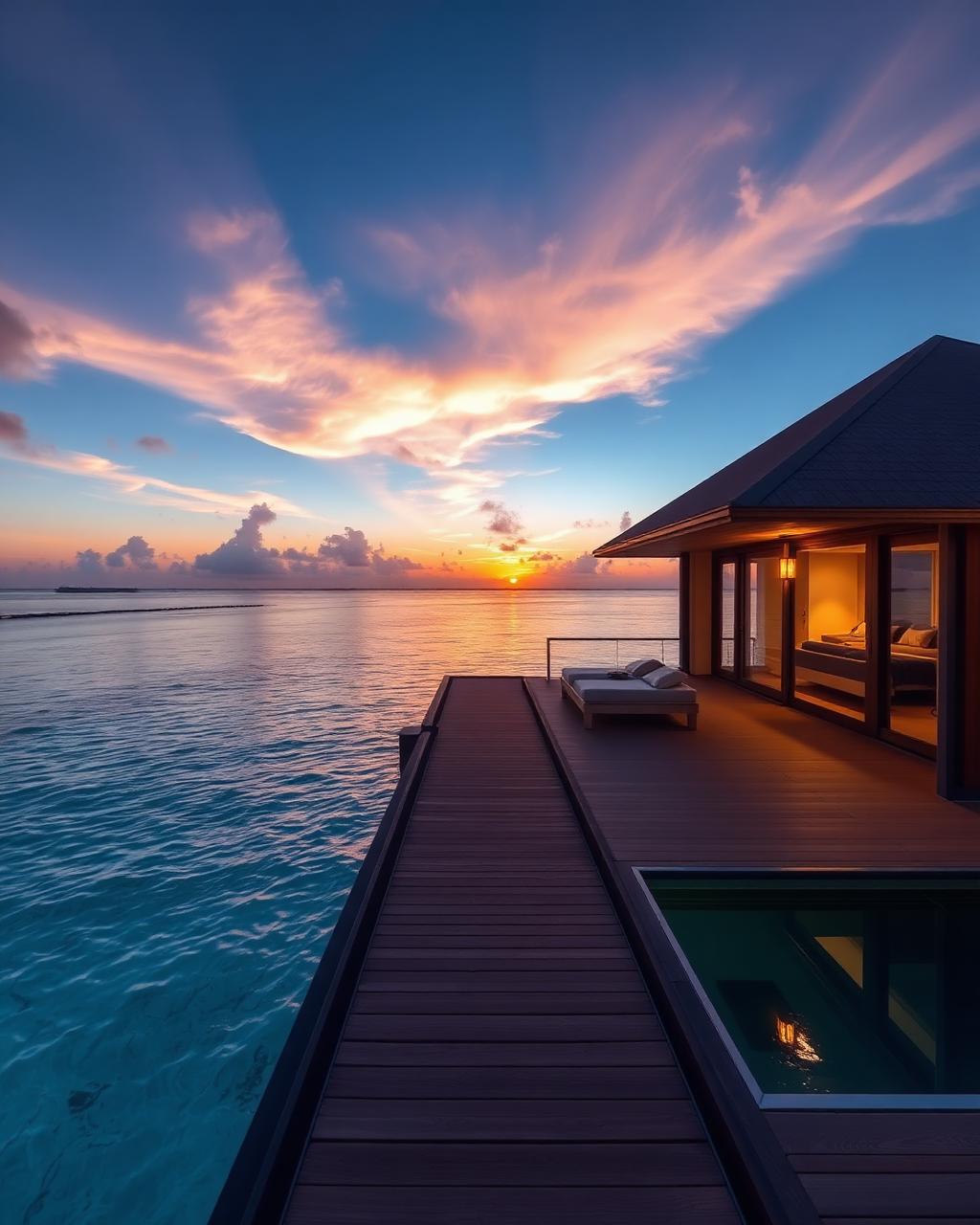
If you have read this far, the question is no longer whether to go. It is which island, which week, and which villa on that island faces the sunset rather than the sunrise. That is the conversation we are here to have.
Where to stay
Book the houses from this story